


According to a luxury residential market analysis by Elite Residence International, well-designed home theaters typically return around 65% of their initial investment at resale – a figure that surprises homeowners on both ends: lower than they hoped, and more nuanced than a flat yes or no.
That gap between expectation and reality is where most home theater investment decisions go wrong. Buyers assume the full cost converts to equity. Sellers assume a dated setup will impress buyers, but it won't. The truth sits somewhere between the two, shaped by a set of variables that are entirely within a homeowner's control, if they plan ahead.
So, does a home theater increase home value? The short answer: mostly yes, but it depends on the market, the quality of the build, and how adaptable the space is for future buyers. Here's what the data and real estate professionals actually say.
Does Home Theater Add Value in Dollar Terms?
A theater room adds value differently than a kitchen renovation or a bathroom upgrade. The Remodeling Magazine 2025 Cost vs. Value Report places home theaters alongside wine cellars and sunrooms in a category of improvements that add lifestyle appeal without guaranteeing dollar-for-dollar returns at resale. By contrast, minor kitchen remodels – the top performer – return over 113% nationally.
That context matters, but it doesn't make a home theater a poor investment. The 65% return benchmark means a $20,000 theater build could add roughly $13,000 in resale value. For luxury properties in competitive markets, the calculus shifts further in the theater's favor.
Where home theaters reliably move the needle:
- Luxury and upper-tier markets, where buyers evaluate the full lifestyle offering of a property, not just square footage and finishes
- Homes where comparable listings already include a theater, making its absence a perceived deficiency rather than its presence a bonus
- Properties priced above $750,000, where entertainment-grade features signal overall build quality and buyer expectations are calibrated accordingly
Real estate professionals note that in high-end neighborhoods, the lack of a home theater can actively detract from buyer perception when similar homes nearby already include one. At that price point, a theater room doesn't add value so much as its absence subtracts it.
Why the ROI Number Misses the Bigger Picture
The 65% figure reflects appraised monetary value – what an assessor attributes to the space. It does not capture two factors that consistently influence actual sale outcomes: saleability and speed.
Even if a home theater doesn't add much monetary value in terms of a realtor's assessment, it can improve a property's saleability, especially for high-end homes, where many luxury buyers mark it as an essential feature on their wishlist.
A home that attracts more qualified buyers sells faster and with less negotiating leverage for the buyer. In a competitive market, that outcome is worth real money, even if no appraiser puts a number on it directly.
The second overlooked factor is the value of years of personal use before the eventual sale. A theater room that returns 65 cents on the dollar at resale while delivering a decade of daily use is a different proposition than a renovation done purely to flip a property. Most homeowners building a dedicated cinema room are not planning to sell within two years, and that context changes the ROI calculation entirely.

What Determines Whether a Theater Room Adds Value?
Not all home theater builds contribute equally to property value. These variables consistently separate value-adding installations from cost centers at resale.
Why Design Flexibility Matters More Than the Equipment
Technology ages. A 4K projection system installed in 2022 is already behind the current standard for high-end installs. Buyers evaluating a home with embedded, outdated AV equipment will discount the value of the room, or mentally budget for replacement.
The infrastructure is what holds value: the dedicated room, the acoustic treatment, the electrical capacity, the seating quality. A neutral, well-built theater space with upgradeable technology reads as an asset. A room locked into a specific era's gear reads as a liability.
The home theater that adds the most value is one that a buyer can picture as their own, not a showcase of the previous owner's preferences.
Why Seating Quality Signals Build Quality
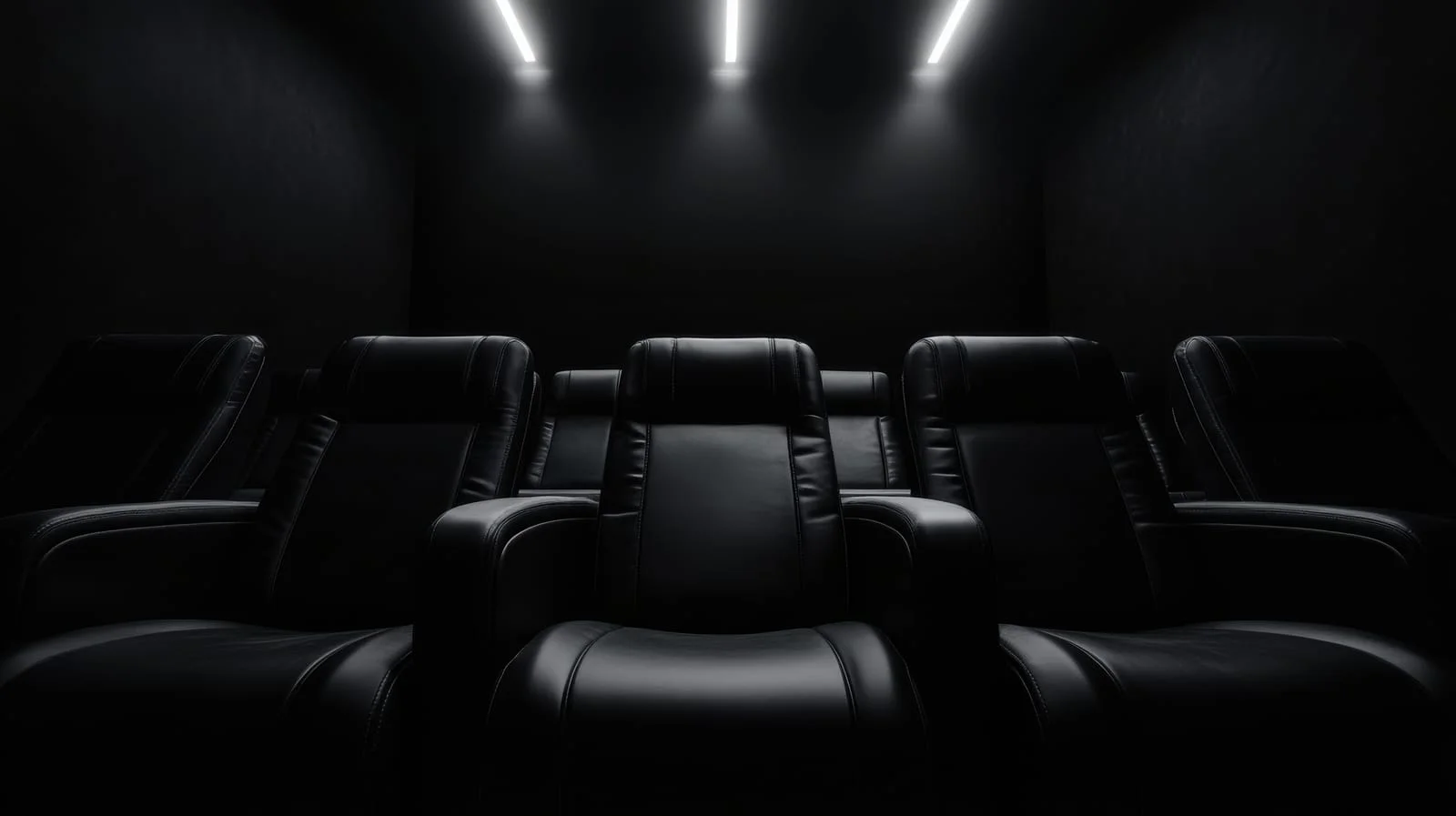
Buyers touring a high-end home theater form impressions quickly, and the seating delivers them faster than anything else in the room. Worn residential recliners communicate that the room was built to a budget. Commercial-grade chairs with clean upholstery, smooth power mechanisms, and ergonomic design communicate that the whole project was done right.
This is one area where the investment in quality pays back at multiple points: during years of personal use, and again when buyers walk in and register the level of finish. Elite HTS commercial-grade theater recliners are built to the same specifications used in VIP cinemas and hotels – heavy-duty mechanisms, high-resilience foam, and a 20-year warranty – which signals build quality that holds up visually and functionally over time.
How to Maximize the Value a Home Theater Adds
For homeowners, designers, and builders approaching a theater installation with resale in mind, these are the decisions that protect and grow the investment:
- Keep the room dedicated and separate. A door and a defined room boundary give the space a clear identity and allow a future owner to repurpose it if they choose.
- Invest in the infrastructure, not just the equipment. Acoustic treatment, electrical capacity, and conduit runs hold their value; specific AV gear does not.
- Choose neutral finishes and an adaptable design. Dark charcoal walls and subtle lighting work for any owner. A hand-painted galaxy ceiling works for fewer.
- Prioritize durable, quality seating. Commercial-grade chairs that still look and perform like new at resale communicate care and quality throughout the project. Choose custom seating configurations built for long-term performance.
- Plan for technology to be updated. Build the room so that display and audio components can be swapped without reconstruction.
For interior designers and AV installers advising clients on theater builds, these principles are also the ones that protect your professional reputation long after the project closes. A room that still impresses at resale reflects well on every collaborator who touched it. Elite HTS works directly with trade professionals to spec seating at the design stage, ensuring commercial-grade quality is part of the project from the start.
The Investment Case Is Stronger Than the Numbers Suggest
A 65% monetary return is not the full story of what a home theater does for a property. Speed of sale, buyer quality, and competitive positioning in a luxury market all carry real financial weight that no appraisal formula captures cleanly.
The home theaters that hold value are built with future buyers in mind from day one – neutral, adaptable, and finished to a quality that still impresses years later. That discipline in the design phase is what separates a theater room that adds value from one that buyers have to think around.
Building a theater room that holds its value starts with the right seating. Request a custom quote from Elite HTS – commercial-grade power recliners, ergonomically designed, custom-built in Canada, with a 20-year warranty.
Frequently Asked Questions
Does a home theater increase home value?
A well-built home theater can add approximately 65% of its construction cost to resale value, according to luxury real estate data. The actual impact depends on market segment, build quality, and how adaptable the design is for future buyers.
Does a theater room add value in all markets?
Not really. The value impact is strongest in luxury and upper-tier markets where buyers expect entertainment-grade features. In entry to mid-range markets, the return is less reliable, and the risk of over-improving relative to neighborhood comps is real.
Can a home theater hurt my home's value?
Yes, under certain conditions. Converting a bedroom reduces the home's bedroom count, which affects both appraised value and buyer pool. Over-investing relative to the home's price point or neighborhood comps is the most common value-destroying mistake.
How does home theater seating affect resale perception?
Seating quality shapes buyer impressions faster than almost anything else in the room. Commercial-grade chairs in good condition signal a high-quality build. Worn residential recliners suggest cost-cutting that buyers may assume extends to the rest of the installation.
Is a home theater a good investment for personal use?
For most homeowners, the primary value is in years of personal use rather than resale. A 65% return at sale, combined with a decade of regular enjoyment, represents a strong overall return on a well-built installation.
How much does a home theater need to cost to add resale value?
There's no fixed minimum, but proportionality matters. A theater room priced at roughly 10-15% of the home's total value in an appropriate market segment is a defensible investment. Exceeding that ratio in a mid-range neighborhood is difficult to recover at resale.