
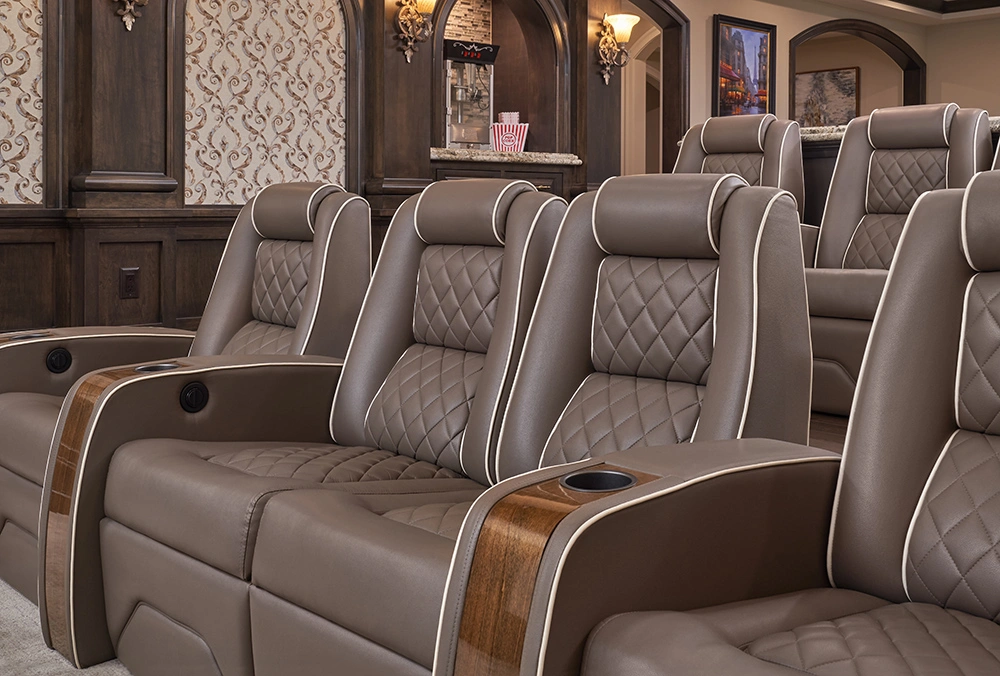

Most homeowners use these two terms interchangeably – but they describe very different spaces. Understanding media room vs home theater before committing to a design saves real money and avoids a layout that underperforms from day one.
According to industry tracking by Fortune Business Insights, recent shifts toward home-based leisure have heavily accelerated private investment in premium home entertainment infrastructure, with urban households increasingly prioritizing spatial audio and large-screen configurations. Getting the right setup from the start matters more than ever.
What Is a Media Room?
A multimedia room is a flexible, multi-purpose entertainment space – designed to handle movie nights, casual gaming sessions, sports viewing, and social gatherings without committing the room entirely to any one of those activities.
The defining trait here is adaptability. Windows are welcome, natural light is not a problem, and the décor follows the rest of the house rather than fighting it. Flat-panel TVs – sometimes concealed behind motorized artwork when not in use – are standard, while audio typically comes from in-ceiling speakers or a calibrated soundbar that blends into the space.
What this means practically: a movie room in a house that functions as a media room can go almost anywhere – a finished basement, a great room, a converted loft. No acoustically sealed walls, no blackout construction required.
Seating in a multimedia room looks more like a living room than a cinema:
- Modular sectionals and L-shaped sofas
- Ottomans and chaise configurations
- Furniture that can be rearranged for different uses

What Is a Home Theater?
A dedicated home theater is built around a single purpose: delivering a cinematic experience. The Home Technology Association (HTA) defines it as a space optimized for a theatrical experience, typically installed in an enclosed bonus room, a basement, or a room planned into the home's original floor plan.
Everything in a theater room in house exists to serve picture and sound quality. Acoustic panels control reflections. Blackout conditions eliminate glare. A projector or large 4K display serves as the centerpiece, paired with a full Dolby Atmos surround sound system calibrated specifically for the room.
Note: a home theater is not a multipurpose space – and that's a feature, not a drawback. When the lights go down, the environment is completely controlled. No ambient kitchen noise, no window wash-out on the image, no competing stimuli.
Media Room vs Home Theater: Key Differences at a Glance
The central question when comparing media room vs home theater is straightforward: should the room do one thing exceptionally well, or several things well enough?
Does Seating Actually Change Between the Two?
Yes – significantly. Seating determines how long people stay, how comfortable they are through a two-and-a-half-hour film, and whether the room achieves its intended purpose at all. It's not decoration; it's the functional core of either space.
The wrong seating choice – fixed theater rows in a social space, or casual sofas in a dedicated dark room – undermines everything else in the build.
Media Room Seating: Flexibility First
In a multimedia room, seating needs to adapt. A sectional that works for a quiet evening with a documentary should rearrange just as naturally for a group watching a game. The furniture reads as residential, not cinematic.
That said, comfort is not sacrificed. Deep cushions, reclining modules, and chaise-style ends are all appropriate – the key difference is that none of the seating is locked into a permanent screen-facing orientation.
Pro tip: modular pieces that reconfigure without tools serve a media room far better than any fixed arrangement, regardless of how comfortable those fixed seats are.
Home Theater Seating: Ergonomics Over Flexibility
In a dedicated theater room in house, the requirements shift considerably. Sightlines become a technical concern – every seat needs a clear view of the screen without the person in front blocking it, which is why tiered riser platforms are standard in larger builds.
Ergonomics carries more weight because viewing sessions are longer and more focused. A proper home theater recliner needs:
- Lumbar support engineered for extended sessions, not just casual lounging
- Adjustable, motorized headrests that position the viewer correctly for the screen height
- Power recline mechanism that operates quietly without interrupting the film
- Cup holders and swivel trays built into the arm – functional additions, not extras
Industry standard: a power recliner requires 12–18 inches of clear space behind it to extend fully. Ignoring this measurement is the single most common and costly seating mistake in home theater builds.
Hybrid Setups: When the Room Is Both
Not every space fits neatly into one category. A reclining sectional in the front row paired with dedicated theater recliners on a raised platform behind it gives the space genuine versatility. This layered approach works well in a movie room in house that functions as both a casual family room and a serious viewing environment – and it's where seating selection becomes especially important.
.webp)
Media Room vs Home Theater: How to Choose?
When the media room vs home theater question needs a definitive answer, work through these steps in order:
- Define primary usage first – if gaming, socializing, and casual viewing are all in the mix, the space is a media room; if cinema-quality immersion is the priority above everything else, it's a home theater
- Assess physical constraints – open-plan rooms cannot reach home theater acoustic standards without significant construction; basement bonus rooms usually can
- Choose seating type before technology – seating determines layout, and layout determines display placement, riser height, and speaker positioning
- Match the display to lighting conditions – a projector in an uncontrolled light environment is a poor investment; a flat-panel TV in a fully darkened room may underperform a properly calibrated projection setup
- Budget realistically – a well-built media room ranges from a few thousand dollars to $50,000, depending on finishes and technology; a dedicated home theater typically starts around $20,000 and scales from there
Seating Is the Decision That Shapes Everything Else
Whether the space becomes a multimedia room or a full theater room in house, seating is not the last decision – it's the first one. The right chair in the right configuration makes the technology perform better, keeps viewers comfortable longer, and determines whether the room gets used as intended for years or becomes an expensive afterthought.
This is what the media room vs home theater question ultimately comes down to: not which projector to buy, but where people will sit, how long they'll stay, and whether the investment holds up to real daily use.
Considering custom seating for a media room or dedicated theater project? Elite HTS designs and manufactures commercial-grade theater seating handcrafted in Canada – ergonomically engineered in collaboration with chiropractor Dr. Grant O'Neill, available in custom upholstery in any color, and backed by an industry-leading 20-year warranty on the frame and mechanism. Request samples and specifications from Elite HTS to get started.
Frequently Asked Questions
What is the difference between a media room and a home theater?
A media room is a flexible, multi-purpose space integrated into everyday home life. A home theater is a dedicated, acoustically controlled room built to replicate a cinematic experience. The difference shapes the entire budget, seating strategy, and technology selection.
Can a movie room in a house double as a media room?
Yes – and many of the best ones do. A hybrid setup with a reclining sectional in front and dedicated recliners on a raised platform behind handles both casual use and serious film viewing without significant compromise.
Do seating requirements actually differ that much?
Considerably. Media rooms favor modular, reclining sectionals or comfortable sofas that adapt to multiple uses. Theater rooms require ergonomically engineered recliners with lumbar support, motorized headrests, and sightline-optimized placement – the difference matters over a three-hour viewing session.
What technology is standard for each type?
Media rooms: flat-panel TV, soundbar or compact surround system, streaming devices. Home theaters: projector or large 4K display, full Dolby Atmos surround sound, acoustic treatment, and calibrated lighting.
Can a small room function as a home theater?
A functional home theater can be built in a space as small as 12×14 feet. That said, 15×20 feet or larger is the preferred minimum for comfortable tiered seating, proper acoustic treatment, and adequate throw distance for front projection.