
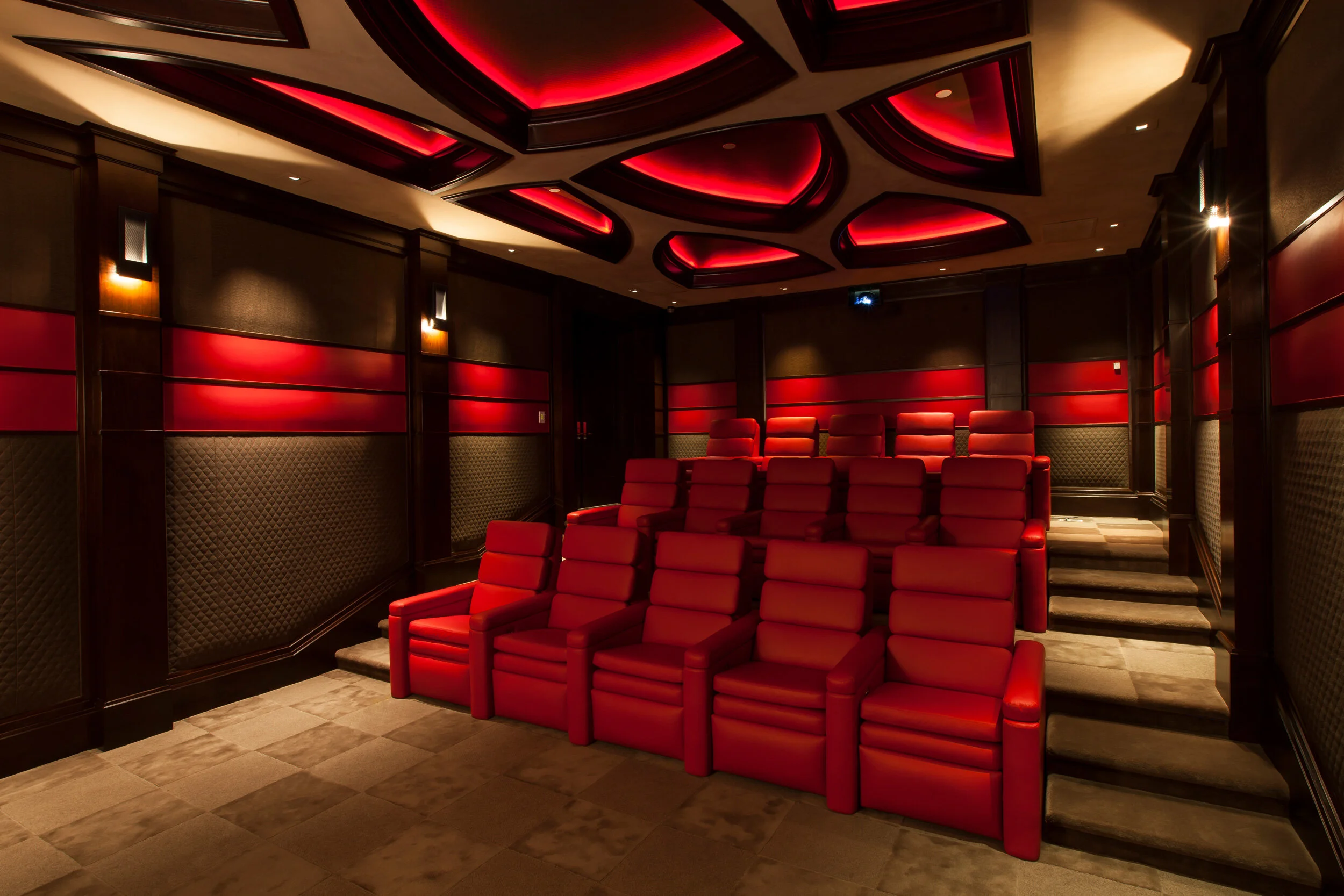

According to Fortune Business Insights (2026), the global home theatre market was valued at USD 13.67 billion in 2025 and is projected to reach USD 28.29 billion by 2034, growing at a compound annual rate of 8.42%, reflecting sustained, long-term consumer investment in premium home entertainment spaces. Seating is where most of the decision-making complexity lives.
Choosing movie theater seating for home use is not as straightforward as it looks. The wrong choice doesn't just feel uncomfortable after ninety minutes. It degrades faster than expected, misaligns with the room's geometry, or clashes with a design scheme that took months to develop. Done right, it anchors the entire room – functionally and aesthetically.
Home theater room seating refers to purpose-built chairs, recliners, sofas, or sectionals designed to optimize comfort, sightlines, and room integration for extended viewing sessions. This home theater seating guide covers every major type, style, and material decision, from foam density to upholstery finish, so the choice you make is one you won't revisit in two years.
What Types of Movie Theater Seats Work Best for Home Use?
The first decision is seating type, and it has more downstream consequences than any other. Type determines spatial footprint, recliner throw depth, sightline geometry, and how many viewers can be accommodated comfortably. Each option suits a different use case.
Power Recliners: The Gold Standard for Dedicated Cinemas
Power recliners are the defining choice for dedicated home theater rooms, and for good reason. Each seat adjusts independently – recline angle, footrest height, and headrest position – allowing viewers of different heights and body types to find their optimal position without compromising the experience for anyone else.
The power mechanism is a critical differentiator between product tiers. Budget recliners use lightweight actuators designed for occasional home use. Commercial-grade mechanisms are built to a heavier specification – thicker steel components, higher cycle ratings, and smoother operation under consistent load. In a dedicated cinema room used regularly, this difference becomes visible within the first year of ownership.
For any dedicated home theater room, a power recliner with a commercial-grade mechanism is the baseline, not an upgrade. The room is built around long sessions; the seating needs to be built for the same.
Row Configurations: The Cinema Layout
Row-style home theater seating – two to five connected recliners sharing console armrests – reproduces the visual logic of a commercial cinema inside a residential space. The connected format creates clean, consistent row lines that integrate naturally with tiered riser platforms and symmetrical speaker placement.
Console armrests between seats serve a practical function beyond aesthetics: they eliminate the physical intrusion of adjacent viewers' arms and provide a natural surface for cup holders and storage without requiring separate side tables.
Row configurations work best when the audience is consistent in size. They're less flexible than individual seats for rooms that accommodate varying group sizes, but for a purpose-built theater with a defined capacity, they deliver the most architecturally coherent result.
Sofas and Loveseats: Casual Media Rooms
Sofas and loveseats suit multipurpose media rooms where flexibility and social atmosphere take priority over strict cinematic performance. They accommodate varied seating postures, support side-by-side viewing without rigid seat boundaries, and integrate more naturally into spaces that also function as living rooms.
The tradeoff is ergonomic precision. A sofa doesn't adjust per viewer; it offers one position for everyone. For rooms used primarily for casual TV watching, gaming, or mixed-use entertainment, that's an acceptable compromise. For a dedicated cinema room designed around long-format films, it introduces fatigue that individual recliners prevent.
Sectionals: Multipurpose Flexibility
Sectionals offer the broadest layout flexibility of any seating format. Modular configurations can be reconfigured for different audiences, and their generous surface area suits family environments where children, adults, and varying party sizes need accommodation in the same room.
The sightline challenge with sectionals is significant. Unlike row configurations, sectionals don't position every viewer at a consistent distance and angle from the screen. In rooms where the display is large and the viewing distance is calibrated, off-axis seating introduces image distortion and audio asymmetry that no equipment calibration fully corrects.

How Does Seating Style Affect the Home Theater Room?
Style and function are not separate considerations in home theater room seating. The style of a chair determines its seat depth, back height, armrest width, and visual weight in the room, all of which interact with both comfort and spatial planning.
Classic Theater Style
Classic theater-style recliners feature tall backs, defined headrests, and row-compatible armrest consoles. Their silhouette reads immediately as "cinema" – intentional, dramatic, and well-suited to rooms designed around that aesthetic. Dark upholstery, contrast stitching, and clean seat-back geometry are characteristic of this style.
For designers working on dedicated home theaters, this style delivers the clearest design narrative. It signals purpose from the moment you enter the room, and it aligns naturally with dark acoustic panels, blackout lighting, and other elements of a cinema-optimized space.
Modern Lounge Style
Modern lounge-style theater seating blends the ergonomic function of a recliner with the aesthetic restraint of contemporary furniture. Lower profiles, streamlined armrests, and neutral upholstery tones allow the seating to read as premium furniture first and cinema equipment second.
This style suits hybrid spaces: rooms that function as home theaters in the evening and as sophisticated living spaces during the day. It's a particularly effective approach for open-plan homes where the media room is visible from adjacent areas and a heavily themed cinema aesthetic would feel out of place.
Luxury and Custom Styles
At the high end of home theater seating, customization extends beyond color selection to silhouette, proportions, stitching patterns, and material combinations. Two-tone color blocking, contrast piping, Alcantara inserts, and bespoke embroidery are all viable options from manufacturers operating at commercial-grade specifications.
This level of customization is not purely cosmetic. Custom configurations allow seat dimensions to be specified precisely for a room – width, depth, back height, and throw distance – ensuring that the seating integrates with the room's geometry rather than being adapted to fit it after the fact.
Elite HTS offers fully custom home theater seating built to commercial-grade specifications, with upholstery, foam density, and configuration options tailored to each project. For interior designers and AV professionals, this kind of specification flexibility at the design stage prevents the compromises that come from adapting standard furniture to a purpose-built room. Explore Elite HTS custom seating configurations for available layouts and options.
What Materials Deliver the Most Comfortable Home Theater Seating?
Material selection operates on two levels: what the seating feels like immediately, and how it performs after two years of regular use. These are different questions, and budget seating tends to answer the first while ignoring the second.
Upholstery: Leather, Performance Fabric, and Alternatives
Top-grain leather is the most durable upholstery for dedicated home theater use. It resists spills, wipes clean without absorbing odors, and holds its visual quality over years of regular contact. The limitation is temperature sensitivity – leather runs cool in winter and can feel warm during long sessions in climates without consistent air conditioning. Premium treated leathers address this through surface finishing, but the trade-off is inherent to the material.
Bonded leather and faux leather should be avoided for any serious installation. The laminated construction peels within two to three years under regular use, particularly at crease points and armrest surfaces. The short-term cost savings are reliably erased by the cost and disruption of replacement.
Performance fabrics – microfiber, recycled synthetics, and treated linen blends – offer a genuinely competitive alternative to leather in 2025 and 2026. Modern performance fabrics resist stains, maintain color stability, and provide a softer tactile experience. They're also available in a substantially wider range of colors and textures, giving designers more control over the room's palette. The maintenance requirement (more frequent cleaning than leather) is the primary drawback in high-use environments.
Velvet and standard fabric upholsteries work well in media rooms with controlled use. Velvet in particular adds acoustic absorption value alongside visual richness – soft, dense materials reduce high-frequency sound reflections in ways that leather does not.
Foam: The Specification That Determines Long-Term Comfort
Foam density is the internal specification most buyers never see and the one that most directly determines whether a seat still feels good in three years.
Residential furniture typically uses foam rated between 1.5 and 2.5 pounds per cubic foot (PCF). Budget seating occupies the lower end of this range – adequate initially but subject to compression and loss of support within months of regular use. Commercial-grade foam starts at 2.5 PCF and above, maintaining its profile and support characteristics under repeated compression cycles far beyond what residential foam can sustain.
The practical implication is straightforward: low-quality foam can begin losing support in as little as three months of regular use. For a room built around extended sitting, that degradation directly undermines the purpose of the investment.
Elite HTS theater seating uses premium high-density foam available in soft, medium, and firm densities – with the vast majority of clients selecting medium as the optimal balance of support and comfort for extended sessions. The chairs weigh over 165 pounds each, a direct reflection of the commercial-grade frame construction and heavy-duty mechanism that justifies the weight.
Frame and Mechanism: What the Weight Tells You
A theater chair's weight is one of the most reliable proxies for construction quality. Residential recliners typically weigh 50 to 80 pounds. Commercial-grade chairs built to the specification used in VIP cinemas and hotels weigh significantly more – a function of steel frame thickness, mechanism weight, and foam density combined.
The mechanism is the component most subject to wear under heavy use. Thin steel actuators with minimal cycle ratings are common in budget theater seating; they develop noise, stiffness, and operational inconsistency within years of regular use. Commercial-grade mechanisms – thick steel, industrial tolerances, higher cycle ratings – maintain smooth, quiet operation over the service life of the chair.
This is why the seating choices that read as most expensive on a spec sheet are often the most economical over a ten-year horizon.
How to Compare Seating Options: A Practical Overview
What to Prioritize When Selecting Home Theater Room Seating
No single seating choice is right for every room. But the hierarchy of priorities applies across almost every project:
- Confirm recliner throw depth before finalizing the floor plan. Power recliners extend 18 to 24 inches when fully reclined. Row spacing must account for this before installation, not after.
- Specify foam density, not just upholstery. The surface material is visible; the foam is what determines how the chair performs in two years.
- Match the seating type to the room's primary purpose. A dedicated cinema gets individual recliners or row configurations. A multipurpose family media room may get more value from a well-specified sectional or sofa.
- Invest in the mechanism. Quiet, smooth, durable operation over years of use is a function of mechanism quality. This is not a specification to compromise on in a room built around the experience of relaxed viewing.
- Consider commercial-grade construction for any dedicated theater. A room designed for extended regular use deserves seating built to the same standard as the spaces that face the most demanding use: VIP cinema and hotel installations.
For homeowners, designers, and AV integrators approaching a project with these priorities in mind, Elite HTS works directly with trade professionals to provide seating specifications, including exact dimensions, weight, and configuration options, at the design stage, before floor plans and structural decisions are finalized.
The Right Seat Makes the Room
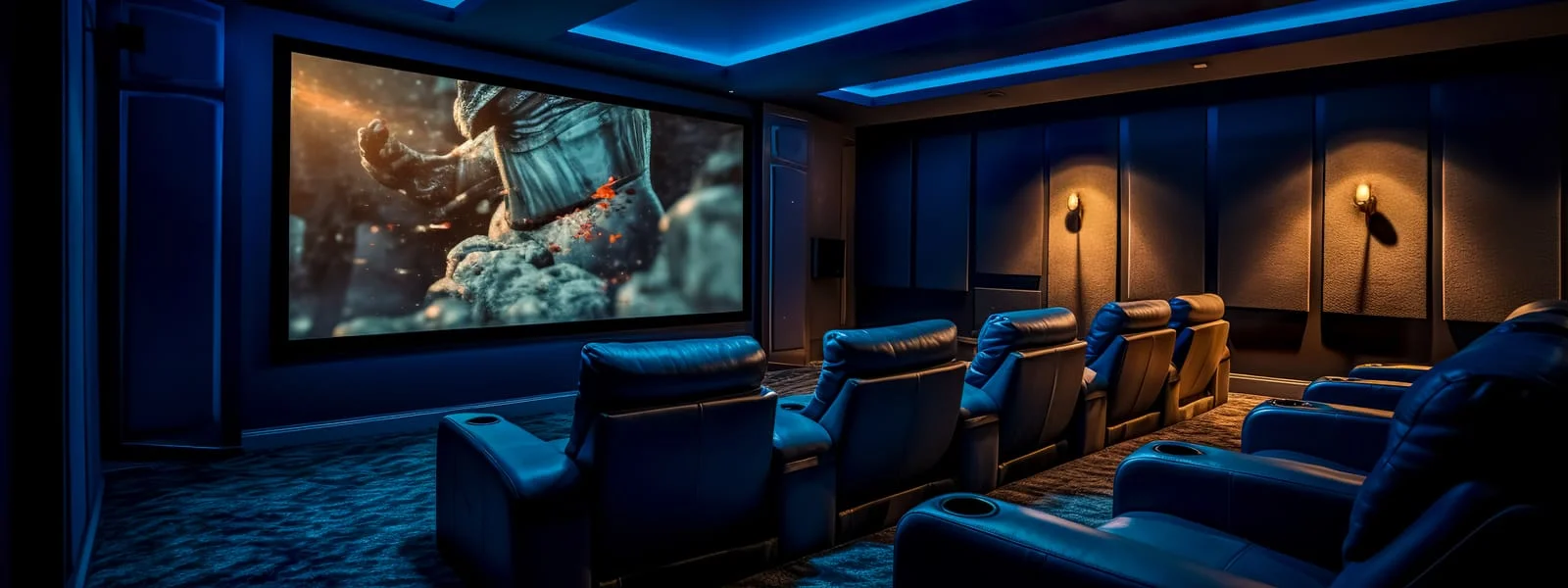
A display can be upgraded. Audio can be recalibrated. Seating, once installed in a finished room, is the element most disruptive to replace. The choice of movie theater seats for home use is the decision that deserves the most scrutiny before commitment, because it's the one that defines every hour spent in the room.
Prioritize foam density over surface finish. Prioritize mechanism quality over feature lists. And for any dedicated cinema room, prioritize commercial-grade construction over residential alternatives, because a room built for serious viewing deserves seating built to the same standard.
Ready to spec the most comfortable home theater seating for your project? Contact Elite HTS – commercial-grade, chiropractor-designed power recliners, built in Canada, with premium high-density foam and a 20-year warranty.
Frequently Asked Questions
What are the most comfortable home theater seating options?
Power recliners with commercial-grade mechanisms, high-resilience foam at 2.5 PCF or above, and adjustable headrests consistently deliver the best long-term comfort for dedicated home theaters. The key is foam density and mechanism quality – both internal specifications that are not visible at purchase but determine how the seat performs after extended use.
What is the best seating for a home theater room?
For a dedicated cinema room, individual power recliners or row configurations with commercial-grade construction outperform residential furniture in every measurable way: ergonomic support, durability, and consistent performance over the service life of the room.
How long does home theater seating last?
High-quality commercial-grade theater seating with premium high-density foam can maintain its performance for ten to fifteen years with normal maintenance. Budget seating using low-density foam may begin showing support degradation in as little as three months of regular use.
Is leather or fabric better for home theater seating?
Top-grain leather is more durable and easier to maintain in high-use environments. Performance fabrics offer more color and texture options, better temperature comfort, and soft-touch appeal. Both are viable – the choice depends on the room's use intensity, aesthetic direction, and maintenance preference. Bonded or faux leather should be avoided for any serious installation.
What should I ask when buying home theater seating?
Ask for the foam density specification (PCF rating), the mechanism weight rating and cycle count, the full recliner throw depth, and whether the frame is steel or composite. These internal specifications determine long-term performance in ways that showroom comfort tests cannot reveal.
How do I choose between individual seats and row configurations?
Individual seats offer per-viewer adjustment and are ideal for rooms where viewers have different ergonomic needs. Row configurations deliver cleaner cinema aesthetics and consistent sightline geometry. If the room has a fixed, known audience, rows are the more architecturally coherent choice. If the audience varies, individual seats offer more adaptability.