
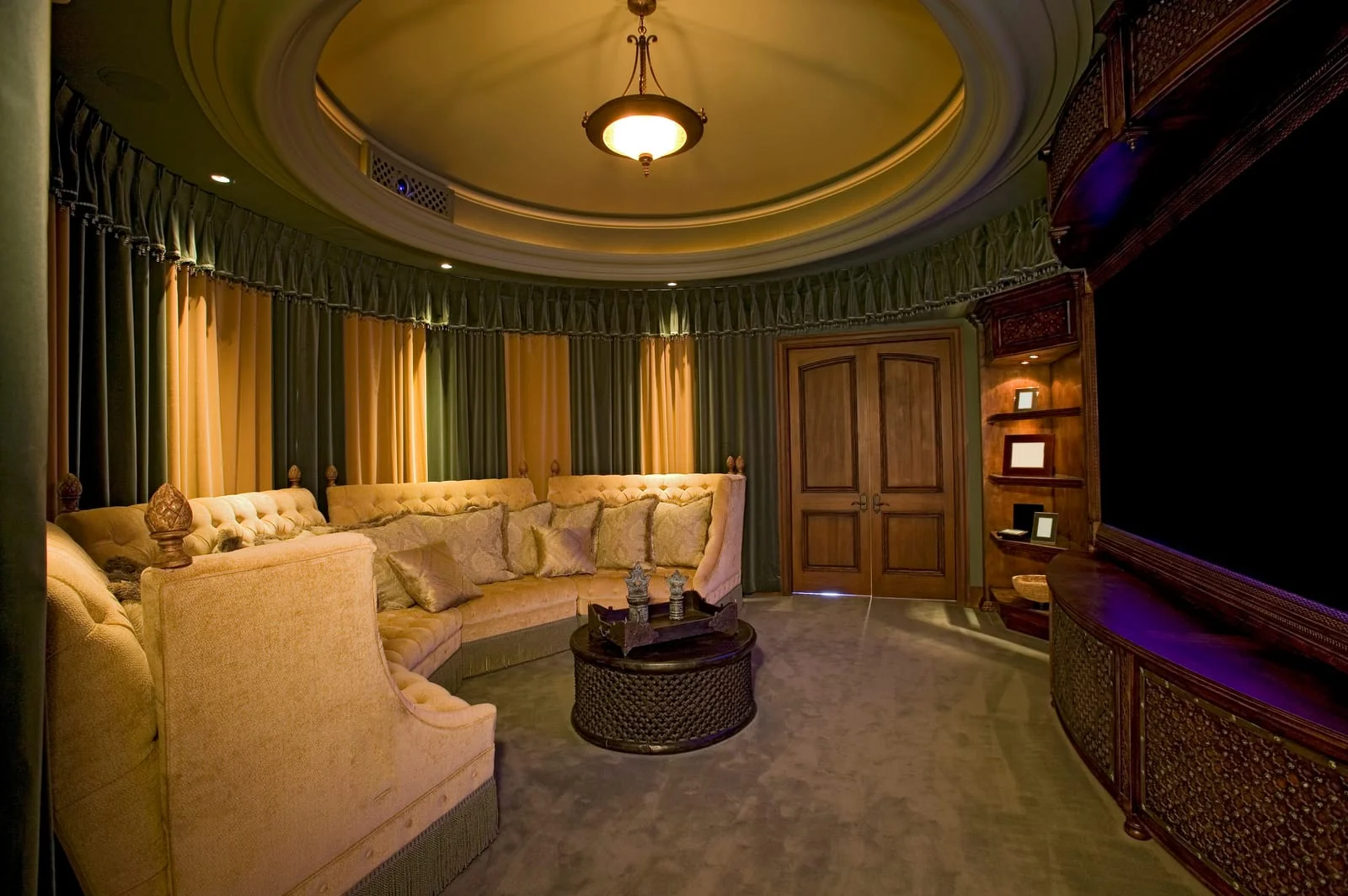

The dedicated home theater used to mean rows of individual recliners bolted to a riser platform. That image is accurate for some buyers — but it no longer captures the full picture. A growing number of homeowners are choosing a theater couch over individual seats, drawn by the flexibility of shared seating, the ease of repositioning, and the way a well-chosen sectional can double as everyday living room furniture without compromising the viewing experience.
According to a market report by Data Horizzon Research, the global home theater seating market was valued at approximately USD 2.1 billion in 2024 and is projected to reach USD 3.4 billion by 2033 — growth driven in part by rising demand for versatile, comfort-forward seating that serves both entertainment and everyday use. The couch-style segment reflects exactly that shift.
What Is a Theater Couch (And How It Differs from Standard Sofas)
A theater couch isn't simply a sofa placed in a media room. It's designed — or selected — with screen viewing as the primary use case. The differences show up in seat depth, back height, cushion firmness, and, in many cases, built-in reclining capability that a standard sofa doesn't offer.
Where a regular sofa prioritizes upright sitting for conversation, a theater couch prioritizes a slightly reclined, supported position for sustained viewing. Seat depth tends to run deeper (typically 22–26 inches versus a standard 20–22 inches), back height is taller to support the head and neck, and armrests are often lower to avoid shoulder fatigue during long sessions. Some configurations include chaise sections, powered recline modules, or integrated consoles — none of which belong on a standard living room sofa.
8 Steps to Choosing the Right Theater Couch
Step 1: Start with Your Room Layout and Viewing Setup
Before comparing fabrics or configurations, measure the room and map the viewing geometry. The distance from the seating position to the screen, the width available for a couch, and the height of the screen relative to seated eye level all constrain the choice before aesthetics enter the picture.
Key measurements to confirm before shopping:
- Room width — how many seats can fit without crowding aisles or blocking doors
- Seating depth with recline — if the couch reclines, account for footrest extension (typically 18–24 inches forward)
- Screen-to-seat distance — for a 4K display, 1.0–1.5× the screen diagonal is the recommended range
- Screen center height — should align with or sit slightly above seated eye level (42–48 inches from floor)
Getting these numbers on paper first prevents falling in love with a configuration that physically won't work.

Step 2: Choose the Right Couch Size and Configuration
Theater couches come in several configurations, each suited to a different room shape and viewer count. The main options worth evaluating:
- Sofa (2–3 seats): Best for smaller rooms or secondary viewing spaces; clean sightlines for all viewers
- Sectional L-shape: Works well in multipurpose rooms; the chaise side doubles as a lounging zone
- Sectional U-shape or curved: Suited to larger dedicated theaters; wraps the room, but requires significant floor area
- Modular systems: Individual pieces that snap together; most flexible for layout changes over time
Configuration determines both how many people the room comfortably accommodates and how much flexibility exists for future rearrangement. The home theater seating collection at Elite HTS covers both individual and couch-style configurations with specifications by size and seat count.
Step 3: Focus on Comfort That Works for Long Viewing Sessions
A couch that feels fine for 20 minutes may be punishing at the 90-minute mark. The variables that determine sustained comfort are seat depth, back angle, and cushion construction — none of which are visible in product photos.
Look for medium-density foam (1.8 lb/ft³ or above) as the base layer, ideally topped with memory foam or gel-infused memory foam for surface comfort. Research published in the National Institutes of Health's PMC database confirms that seating that supports the lumbar region and encourages a slightly forward pelvic tilt significantly reduces spinal load during extended sitting — an important factor for anyone using their theater couch for two-plus-hour films regularly.
Step 4: Reclining vs. Non-Reclining Theater Couches
Not every theater couch reclines, and that isn't always a disadvantage. The right choice depends on how the room is used.
Reclining theater couches offer adjustable back positions and powered or manual footrest extension. They're the better choice for dedicated screening rooms used primarily for films and long viewing sessions. The trade-off is floor space: a fully extended reclining sectional requires significantly more room depth than one that stays upright.
Non-reclining theater couches suit multi-purpose rooms better — they look like conventional furniture, allow more flexible seating arrangements, and don't require the same clearance constraints. Comfort can still be excellent with the right cushion depth and back angle.
For rooms that serve double duty as both home theater and living space, the home theater design guidance section is worth reviewing before committing to a reclining configuration.
Step 5: Material Selection That Matches Your Lifestyle
The upholstery choice affects daily comfort, maintenance burden, and how long the couch looks presentable under regular use. The main options, with honest trade-offs:
Bonded leather is worth avoiding in a couch, regardless of budget. The surface looks identical to genuine leather initially, but degrades quickly under the heat and friction of regular use.
Step 6: Built-In Features That Add Real Value
Not every available feature improves the experience, but some are genuinely worth the addition in a theater context:
- USB and wireless charging ports in armrests or consoles — useful if phones are in use during viewing
- Lighted cup holders — essential for late-night viewing without ambient lighting
- Fold-down tray tables — far more practical than cup holders alone for snacks and drinks
- Storage consoles between seats — keep remotes, controllers, and accessories off the floor
- LED base lighting — low-key ambiance that doesn't wash out the screen
Features to skip unless specifically needed: built-in speakers (almost always outperformed by a dedicated sound system), massage functions (useful for some buyers but rarely used after the first month), and motorized headrests on couches that already recline fully.
Step 7: Modular vs. Fixed Theater Couches
Fixed sectionals are typically lower cost, more structurally stable, and available in cleaner silhouettes. Modular systems cost more but offer long-term flexibility — pieces can be added, rearranged, or replaced individually if one section wears out or the room layout changes.
For buyers setting up a dedicated theater room, they don't expect to reconfigure; a fixed sectional is usually the better value. For those in larger homes with evolving room uses, or anyone planning to add seats over time, modular systems justify the premium. Browsing available configurations by brand helps compare what's available at each price tier.
Step 8: Matching Theater Couches to Different Home Cinema Styles
The couch needs to fit the room's design language — not dominate it or disappear into it. Three common home cinema styles and what tends to work:
- Minimalist/modern: Clean-lined low-profile sectionals in dark neutral fabrics or black leather; avoid tufting or ornate stitching
- Classic/traditional: Channel-stitched leather or rich microfiber in deep browns, navies, or burgundies; wooden leg finishes
- Casual / family room hybrid: Performance fabric in lighter or mid-tone colors; modular configurations for flexible seating arrangements
Color choice also has a practical dimension in theater rooms: darker upholstery absorbs ambient light better than light-colored fabric, which can create distracting reflections during dark scenes.

Theater Couch vs. Recliner Seating: Which One Is Right for You?
The choice between a theater couch and individual recliner seats comes down to how the room is used and who uses it.
Individual recliners make sense when every viewer wants independent control over position, when the room is a dedicated theater used primarily for films, or when a second row on a riser platform is part of the design. They offer the most cinema-accurate experience and are easier to configure for precise sightlines.
A couch makes more sense when the room doubles as a living space, when flexibility and casual use matter, when young children are part of the household, or when the budget doesn't stretch to a full set of premium individual seats. A well-chosen couch can deliver nearly equivalent comfort at lower per-seat cost — provided the right features are prioritized from the start.
Frequently Asked Questions
How deep should a theater couch be? Seat depth of 22–26 inches is the typical range for theater couches designed for reclined viewing. Shallower seats (under 20 inches) are better suited to upright use and tend to feel uncomfortable during extended viewing sessions.
Can a regular sectional sofa work as a theater couch? It can, but compromises are likely. Standard sofas aren't built for sustained viewing posture — seat depth is usually insufficient, back angle is often too upright, and there's no head or neck support for fully relaxed positions. A purpose-designed couch or a sectional explicitly built for media room use performs noticeably better for actual movie watching.
What size theater couch fits a 12×15-foot room? A 3-seat sofa or small L-shaped sectional typically works well in that footprint. A full U-shaped sectional or large modular configuration requires at least a 14×18-foot room to avoid overcrowding sightlines and movement space.
Is leather or fabric better for a home theater couch? Top-grain leather is more durable and easier to clean, making it the long-term winner for most buyers. Performance fabric is the better choice for households with pets, young children, or anyone who finds leather uncomfortably warm during long sessions.
Comfort, Layout, and Usage Guide: Your Best Choice
The right theater couch isn't the one with the most features or the highest price — it's the one that fits the room, accommodates how it's actually used, and holds up over years of regular viewing. Comfort, layout constraints, and realistic lifestyle demands should lead every decision, with aesthetics following rather than driving.
Taking the time to measure carefully, understand the cushion construction, and choose materials suited to the household avoids the most common regrets. For a curated selection of theater couches and home cinema seating built around these principles, visit Elite HTS.