
%206xb.webp)

The global home theater market is estimated at $15.06 billion in 2026 and is projected to reach $27.17 billion by 2033 – and that growth isn't driven by people buying bigger TVs. It's driven by people wanting a genuinely different experience at home. Cinema-quality, not just "decent."
The gap between a room that has home theater gear and a room that feels like a theater is wider than most expect. And it usually comes down to the same recurring oversights: unbalanced components, skipped acoustic treatment, and seating that nobody wants to sit in for three hours straight.
What actually creates immersion? Below are the 7 home theater must haves – the components, accessories, and decisions that work together to make a real difference.
1. High-Quality Display: Match the Screen to the Room
The display sets the stage for everything else. Get the sizing wrong, and even a premium AV system won't compensate.
What Screen Type Is Right for Your Setup?
The answer depends on room depth, ambient light, and how the space is used.
- 4K OLED panels deliver the deepest blacks and most accurate color in dedicated, light-controlled rooms
- 4K laser projectors with ambient-light-rejecting screens work better for large-format setups or rooms that can't be fully darkened
- 8K displays are dropping in price – brands like Samsung and LG are leading the charge, though content availability still lags behind
Pro Tip: The optimal viewing distance for 4K content is roughly 1.5× the screen's diagonal measurement. A 75-inch display works best from about 9–10 feet away.
Glare and reflection cause more damage to picture quality than most people realize. Positioning the screen away from windows – or installing blackout curtains – can make a mid-range display outperform an expensive one placed carelessly. For a deeper dive into panel selection, read through our comprehensive guide to tv resolutions.

2. Surround Sound System: The Component That Makes the Body React
Sound is where emotional response actually lives. The storm rolling in from behind, the dialogue separating from ambient noise, the low-end impact of a score – none of that translates through stereo.
A proper multi-channel surround system is one of the most critical must have home theater components in any serious build. At a minimum, a 5.1 configuration. Ideally, a 7.1 or Dolby Atmos setup with height channels.
How to Choose the Right AV Receiver
Dolby Atmos and DTS:X are now considered standard benchmarks for residential setups – any receiver worth buying in 2025 should support both. Look for:
- HDMI 2.1 ports for 4K/120Hz passthrough
- Auto-calibration (Audyssey, YPAO, or Dirac) to tune the system to the room's acoustics
- Enough amplifier channels to match the speaker configuration planned for the space
Dolby Atmos and DTS:X adoption has grown sharply in the mid-tier segment, bringing immersive audio to systems priced between $300 and $700 – a segment that grew from roughly 20% of unit sales in 2022 to an estimated 30–35% in 2026. This means genuine immersion is no longer reserved for high-end builds.
Speaker placement shapes the result as much as speaker quality. Rear surrounds too close together, or a subwoofer shoved in a corner without calibration, collapses the soundstage. Run the auto-calibration tool after every physical change to the room.
3. Comfortable Seating: The Most Underestimated Must Have
Ask someone to list the home theater must haves, and they'll say display and sound system instantly. Ask about seating, and the answer is usually "we have a decent couch." That's the gap that ruins a two-hour experience at the 90-minute mark.
What Makes Theater Seating Different?
Purpose-built theater seating holds the viewer in a position where:
- Eyes fall naturally on the screen center without neck strain
- Lumbar support maintains posture without requiring active effort
- Seat depth is calibrated for extended sessions, not short visits
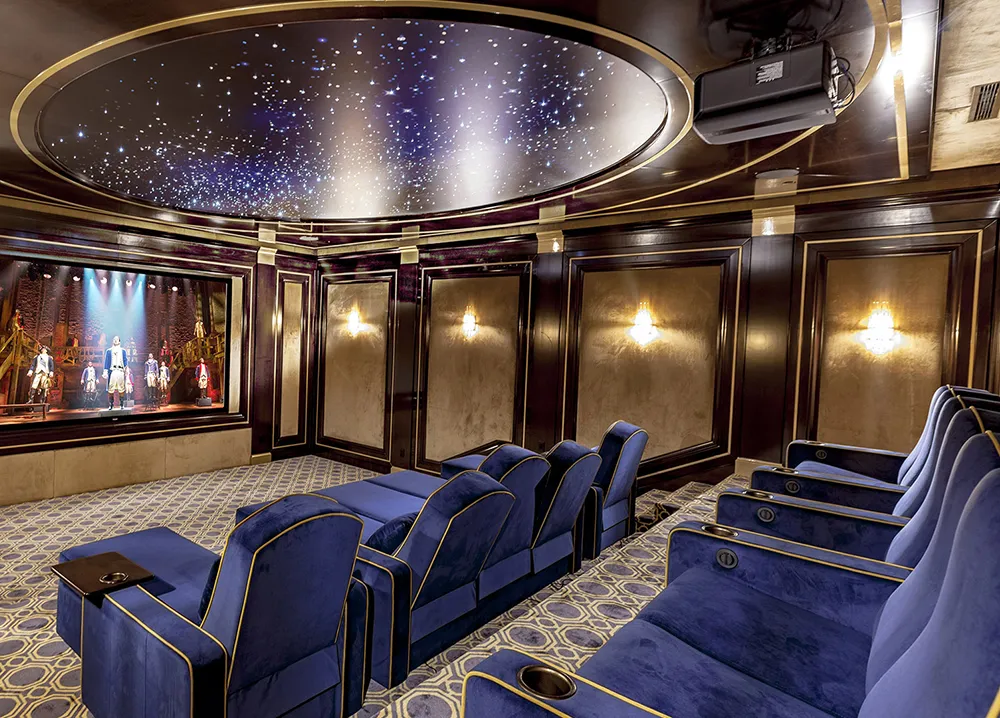
For dedicated theater rooms – especially commercial or high-use environments – off-the-shelf sofas simply aren't built for the job. Elite HTS builds commercial-grade theater couches and cuddle couches in Canada, with custom upholstery in any color and a 20-year warranty. The construction is designed for real, sustained use – not showroom conditions.
Key seating considerations for layout planning:
- Row depth and spacing – sightlines from every seat, not just the center position
- Built-in features – cup holders, USB charging ports, under-seat storage reduce mid-movie interruptions
- Raised rear rows – in multi-row setups, platform elevation keeps every viewer's view clear
Request samples and specifications from Elite HTS – Canadian-made, built to commercial standards, available in any upholstery configuration.
4. Home Theater Lighting: Control Creates Comfort
Lighting belongs in every list of must have home theater accessories – not because it's glamorous, but because it directly affects how long the eyes stay comfortable.
Why Bias Lighting Matters More Than Darkness
Complete darkness with a bright display creates eye fatigue within an hour. The sharp contrast between the panel and the surrounding black wall forces the pupils to constantly readjust. Bias lighting – LEDs mounted behind the display – solves this by adding a neutral glow that reduces perceived contrast ratio without washing out the picture.
Beyond bias lighting, a layered approach works best:
- Dimmable overhead lighting on a separate circuit from accent and floor-level lighting
- Smart scene presets that shift the room into "movie mode" with a single command
- Warm-toned bulbs away from the screen to avoid blue-spectrum reflections on the panel
5. Media Source and Streaming Setup: Quality at Every Stage
A top-tier display connected to a compressed streaming feed will still disappoint on close inspection. The source matters.
4K Blu-ray remains the quality benchmark – higher bitrate, lossless audio, no compression artifacts. Streaming services like Netflix and Apple TV+ carry native 4K Dolby Vision content, but their compression means the signal is a step below physical media, even at the best connection speeds.
Streaming subscriptions now exceed 90% of US households, and average home media usage has increased 15–20% compared to 2019 baselines – which means the content pipeline is more central to the experience than ever before.
Pro Tip: Dedicate a separate network connection or VLAN to the home theater. Shared bandwidth with other household devices causes buffering during high-bitrate 4K streams, especially with HDR content.
A centralized media hub or smart control system that consolidates all sources into a single interface removes friction and keeps the experience smooth from the moment the content starts.
6. Acoustic Treatment and Soundproofing: The Invisible Upgrade
This is the most consistently overlooked of all home theater must haves – and often produces the most dramatic before/after difference when added.
What Does Acoustic Treatment Actually Fix?
Without it, sound reflects off hard walls, creating echo and blur that muddies dialogue and smears music. The speaker system works against itself. With proper treatment:
- Bass traps in corners absorb low-frequency buildup
- Mid-frequency panels on the side and rear walls tighten the soundstage
- Soft furnishings – thick rugs, upholstered seating, curtains – absorb ambient reflections
Soundproofing (containing sound within the room) is separate from acoustic treatment (managing sound inside the room). Full soundproofing involves decoupled wall assemblies and mass-loaded vinyl – a construction-level project. For existing rooms, even partial measures like door sweeps, solid-core doors, and heavy curtains reduce leakage significantly.
7. Accessories That Actually Improve the Experience
The gap between a good theater room and a great one often comes down to a short list of functional additions – the kind that don't appear in spec sheets but matter during a three-hour film.
82% of consumers use social platforms to research products, and smart integration is now one of the top-cited purchase drivers for home theater buyers. A unified control system reflects exactly that shift – one button for "Movie Mode" that dims lights, switches inputs, and adjusts volume is something anyone who's used it won't give up.
Additions that consistently improve the overall experience:
- Universal remote or smart hub (Control4, Logitech Harmony, or custom-programmed panels)
- Low-latency display mode for gaming – under 15ms response time without sacrificing picture quality
- Snack and beverage setup – popcorn machine, cup holders, countertop mini-fridge; the fewer interruptions, the better
- Cable management – in-wall conduit, raceways, or WiSA wireless speakers; visible cable runs are a visual distraction and a physical hazard
Common Mistakes That Undercut an Otherwise Good Setup
Even well-researched builds get derailed by these recurring errors:
- Spending heavily on one component and cutting corners on others – a $10,000 display with a $200 soundbar is a wasted investment
- Using standard living room furniture as theater seating – it fails before the second act
- Skipping acoustic treatment to save budget – the single most regretted cut
- No cable or device management plan – every friction point chips away at the experience
- Buying decorative accessories over functional ones – if it doesn't improve sound, picture, or comfort, it doesn't belong in the build
Home Theater Must-Have Checklist
Planning a dedicated home theater and need seating that performs as well as it looks? Elite HTS builds commercial-grade theater couches and cuddle couches in Canada – custom upholstery in any color, structural durability for high-use environments, and a 20-year warranty. Request samples and specifications from Elite HTS and invest in seating built to last as long as the room itself.
Frequently Asked Questions
What are the essential home theater must haves for any setup?
The core components are a quality display, multi-channel surround sound system, purpose-built seating, controlled lighting, a reliable media source, and acoustic treatment. Smart accessories and cable management complete a functional build.
Is surround sound really necessary, or does a soundbar work?
A soundbar delivers convenience and fits most casual setups. For genuine immersion – where sound moves spatially around the room – a full 5.1 or 7.1 multi-channel system with an AV receiver is in a different category entirely.
How much does seating actually affect the home theater experience?
More than most people anticipate. Poor ergonomics breaks immersion well before the movie ends. Theater-specific seating – with proper headrests, lumbar support, and seat depth – is one of the highest-impact investments relative to cost.
Do acoustic panels make a noticeable difference in a regular room?
Yes, and often dramatically. Untreated rooms create echo and bass buildup that muddy even a high-end speaker system. Proper treatment lets the system perform as designed – without the reflections fighting against it.
Can a small room deliver a truly immersive home theater experience?
Absolutely. Smaller rooms are often easier to treat acoustically and control visually. Properly sized equipment and deliberate layout planning matter far more than square footage.
What's the right viewing distance for a 4K display?
The general guideline is 1.5× the screen's diagonal size. For a 65-inch TV, that's approximately 8 feet; for a 75-inch, around 9–10 feet.