
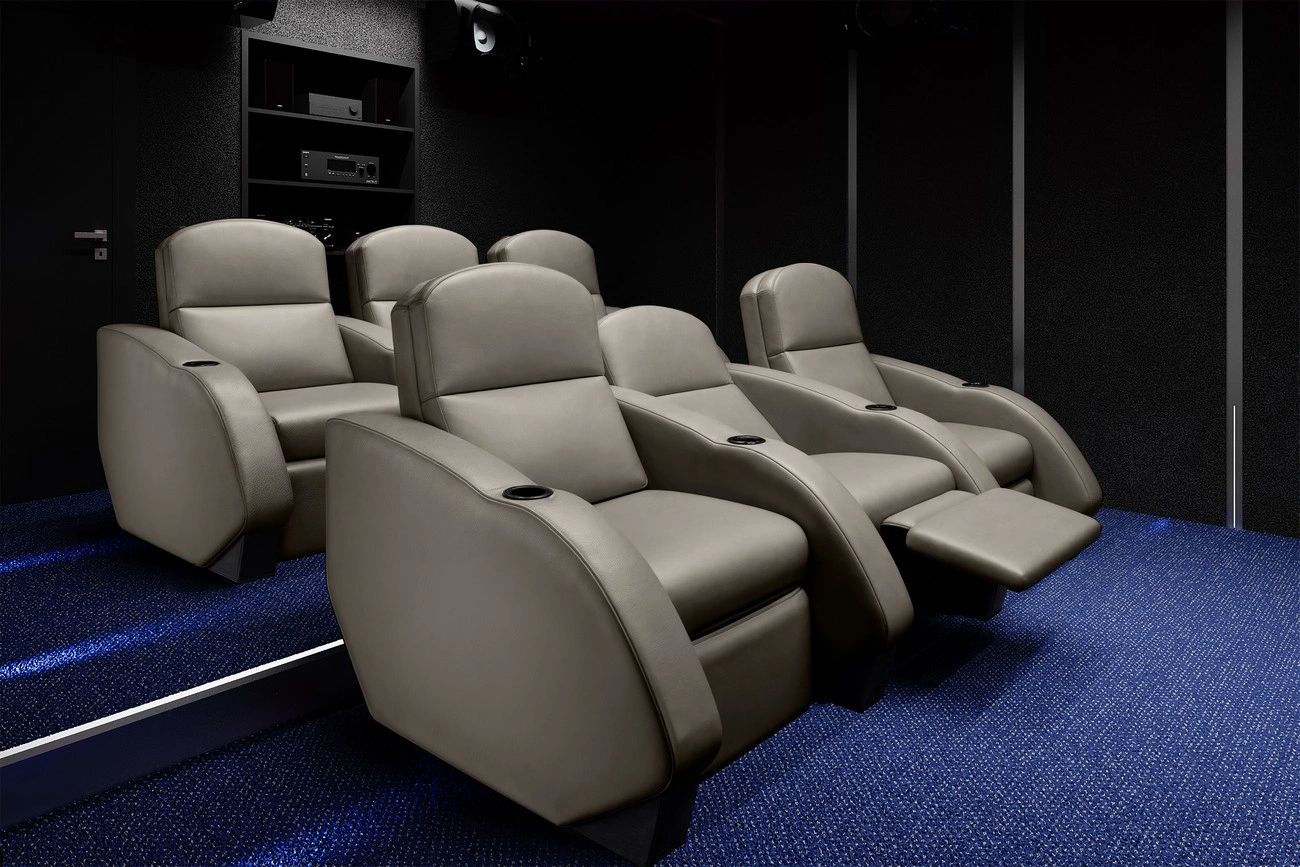

The screen size gets all the attention. So does the sound system. But ask anyone who sat through a two-hour film on a stiff, poorly positioned chair – the memory of that discomfort outlasts any visual experience. A well-designed movie theater with reclining seats shifts the priority to where it belongs: the person watching.
Getting it right involves more than buying comfortable chairs and placing them in front of a screen. Room dimensions, row spacing, recline clearance, sightlines, materials – each of these decisions affects how the space actually functions day to day. The sections below walk through the full process, step by step.
Why Layout Planning Should Always Come First
Most homeowners start with the seats. They find recliner cinema seats they like, order them, and then figure out where everything goes. That sequence causes the majority of expensive post-installation problems – seats that can't fully recline, rows that block each other's sightlines, or aisles too narrow to walk through comfortably.
The layout should always come first. It defines what size and type of seat will actually work, how many rows fit, and where every element in the room needs to go. Choosing seats before doing this is like buying furniture before measuring the room.
What to Measure Before Anything Else
Before sketching any layout, record these dimensions accurately:
- Room width – wall to wall at the widest usable point
- Room depth – from the screen wall to the back wall
- Ceiling height – at multiple points if the ceiling isn't flat
- Obstacles – doors, HVAC vents, built-in shelving, columns, baseboards
Floor plans and architectural drawings can be misleading. Physical measurements, taken with an actual tape measure, catch the details that drawings miss.
Pro tip: Subtract at least 6 inches from each wall as a buffer. This accounts for baseboards, trim, and the visual effect of furniture sitting flush against a surface – it always looks and feels more cramped than the raw numbers suggest.
A practical minimum for a dedicated movie theater with reclining seats is roughly 15 feet wide and 20 feet long. Smaller rooms can still work, but they typically limit the layout to a single row and narrow the seat options considerably.

How Screen Size Determines Seat Placement
Viewing distance is calculated from screen size – not the other way around. Here's the standard approach:
- 1080p displays: Sit 1.5 to 2 times the screen's diagonal measurement from the screen
- 4K displays: Sit 1 to 1.5 times the diagonal – resolution is high enough to allow closer viewing without losing image quality
For a 70-inch 4K screen, the front row should sit 5.5 to 8.75 feet from the display. Once that number is fixed, everything else – row count, riser height, back-row placement – can be calculated outward from it.
Spacing Requirements That Most Guides Underestimate
This is where the math gets precise – and where most movie theater with reclining seats designs run into trouble. The problem is almost always the same: people measure the seat's upright footprint and plan the room around that number. The reclined footprint is what actually matters.
Proper spacing in a recliner seats movie theater has three components: row depth, row-to-row clearance, and side aisle width. Each one needs to be calculated correctly for the room to function.
Row Depth: The Number That Actually Controls Layout
A standard theater recliner measures 38 inches deep when upright. Fully extended, that same seat occupies approximately 67 inches of depth. The reclined measurement is what needs to fit – not just between the wall and the front row, but between each row in a multi-row setup.
Row spacing benchmarks (measured front edge to front edge):
- 36 inches – absolute minimum; works, but the person behind has to slide past to get through
- 42 inches – comfortable standard; allows walking past a fully reclined seat without contact
- 48 inches or more – generous; comparable to commercial cinema clearance
For rooms with limited depth, wall-hugger recliners are worth serious consideration. These models slide the seat forward during recline rather than pushing the backrest backward – reducing required rear clearance from 18–24 inches to just 4–6 inches.
Width, Walkways, and the Math Behind Them
A single theater recliner with armrests typically runs 35 inches wide. A row of four seats spans roughly 122 inches (just over 10 feet). Add the minimum aisle clearance of 20 inches per side, and the room needs to be at least 183 inches – or 15.25 feet wide – to accommodate that configuration comfortably.
Side aisles aren't optional. Every seat in the row needs accessible entry and exit, not just the end seats.
How to Choose Recliner Cinema Seats That Fit the Room
Once the layout is mapped, seat selection becomes straightforward. The room's measurements define the constraints – seat width, depth, recline mechanism, and configuration all need to match what the space allows.
The two biggest decisions at this stage are the recline mechanism and the seating configuration.
Power vs. Manual: Which Recline System Is Right?
Manual recliners lock into three positions: upright, mid-recline, and full recline. Power recliners adjust continuously, letting each viewer settle at exactly the angle they prefer. For a dedicated home theater used regularly, power recline is almost always worth the additional cost. The difference in usability over the years of daily use is significant.
Higher-end configurations also include power headrests and power lumbar support – useful for extended viewing sessions where posture support needs to be adjusted without leaving the seat.
Single vs. Paired Seating Configurations
- Single recliners give each viewer full independent control and work well when viewers have different comfort preferences
- Double recliners (two seats sharing a center console) suit couples and feel more cohesive than two individual chairs side by side
- Alternating doubles and singles across a row offers flexibility for groups of mixed sizes without disrupting the overall layout
For rooms that regularly host four or more people, curved row arrangements – where seats angle slightly inward – improve sightlines for outer seats without requiring the room to be any wider.
Ergonomics and Materials: What Determines Long-Term Comfort
A recliner seat movie theater that looks right on the showroom floor can still be uncomfortable after an hour of actual use. Ergonomics needs to be evaluated relative to the people using the seats – not against an abstract standard.
The key ergonomic variables to assess before purchasing:
- Seat depth – too deep removes lumbar support for shorter viewers; too shallow leaves taller viewers without adequate leg support
- Lumbar adjustability – fixed lumbar works for one body type; adjustable lumbar works for most
- Headrest position – should support the neck without pushing the head forward
- Footrest angle – an improperly angled footrest puts pressure on the back of the knee rather than distributing weight evenly along the leg
Note: Look for seats with foam rated at a minimum density of 2.2 lb per cubic foot. This is the commercial-grade benchmark. Lower-density foam compresses and loses support faster – sometimes within a year or two of regular use. This specification rarely appears in standard product listings but is worth asking about directly.
What Material Works Best for a Recliner Seat Movie Theater?
The right upholstery depends on how the room is used and the climate it's in.
Full-grain leather develops a natural patina over time and is the most durable option for high-use rooms. It's also the most expensive.
Leather Match uses genuine leather on contact surfaces – seat, back, armrests – and bonded or faux leather on the sides. It balances durability and cost for most households.
Performance fabric breathes better than leather and stays cooler during longer sessions. It's harder to clean, but when treated with moisture resistance, it holds up well in households with pets or young children.
One practical note: leather retains heat. In a room without strong climate control, this becomes noticeable during longer sessions. Fabric doesn't share this issue, but it requires more consistent maintenance.

Built-In Features Worth Adding
These aren't luxury extras – they affect how usable the seats are in everyday use:
- Built-in cup holders – keep drinks stable and within reach without needing side tables that consume floor space
- USB charging ports – standard in commercial-grade seating and genuinely used during every session
- Center consoles or storage trays – hold remotes, phones, and snacks without cluttering the room
- LED accent lighting along the seat base – subtle enough not to distract from the screen, bright enough to navigate the room safely without turning on overhead lights
Mistakes That Are Easier to Avoid Than Fix
Even well-planned designs for a movie theater with reclining seats have common failure points. Most come down to prioritizing capacity or aesthetics over how the room will actually be used.
The most frequent errors:
- Placing the front row too close to the screen – causes neck strain, especially for seats at the outer edges of a wide room
- Pushing seats against side walls – restricts arm movement and makes end-seat entry and exit awkward
- Overcrowding rows – one seat too many in a row compromises recline clearance for every seat in it
- Designing for maximum capacity rather than typical use – a room built for eight that usually holds two people feels antisocial and is harder to maintain
That last point is underappreciated. Most home theaters are used by one or two people the vast majority of the time. Designing for realistic use – with generous spacing and well-positioned seating – produces a room people actually want to spend time in.
Build It Right the First Time With Elite HTS
The decisions made during planning – spacing, seat specifications, materials, configuration – determine how a theater performs for years. Getting those decisions right from the start is far less expensive than correcting them afterward.
Elite HTS produces commercial-grade home theater seating built in Canada, with custom upholstery available in any color and a 20-year warranty. Whether the project calls for two seats or a full multi-row installation, the construction is built for repeated, long-term use – not showroom performance.
Frequently Asked Questions
What is the ideal row spacing for a movie theater with reclining seats?
42 inches front-to-front is the comfortable standard. At this distance, someone can walk past a fully reclined occupant without making contact. 36 inches is the workable minimum, but it's tight.
How much space does a recliner seat need to fully extend?
Most theater recliners require approximately 67 inches of depth when fully reclined, compared to 38 inches when upright. Wall-hugger models reduce rear wall clearance to 4–6 inches by sliding the seat forward during recline instead of pushing the backrest backward.
Are power recliners worth the extra cost?
For a dedicated home theater used regularly, yes. Power recline offers continuous position adjustment rather than three fixed positions, and the difference in day-to-day usability is noticeable. The main requirement is an accessible electrical outlet near each row.
What is the minimum room size for a proper recliner seat movie theater?
15 feet wide and 20 feet long is a practical minimum for a multi-seat layout with adequate spacing. Smaller rooms can accommodate a single row of two or three seats, but the layout options become limited.
Can single and double recliners be mixed in the same row?
Yes – alternating doubles and singles in a row is a practical configuration for rooms that host varying group sizes. The key is ensuring consistent seat height and depth across configurations so the row looks and functions cohesively.
Does the powered recline make noise that disrupts the movie?
The motor hum from quality power recliners is low – typically not noticeable over a film's audio. Cheaper motors can be louder. Asking for a live demonstration before purchasing is the most reliable way to assess this.