

A dedicated home theater used to mean a separate room, a full basement, or at minimum a house with a spare 400 square feet. Not anymore. According to the Yelp report, searches for home theater installers surged 562% in a single year – with apartment owners and den conversions accounting for a major share of that demand. More people are creating real cinema experiences in small, unconventional spaces.
The challenge isn't the screen or the sound system. It's the seating. Choose wrong, and even a beautifully equipped room feels cramped, poorly arranged, and uncomfortable after an hour. This guide covers the most effective small home theater seating ideas for tight spaces – what to buy, how to arrange it, and what mistakes to skip entirely.
Why Seating Decisions Hit Differently in Small Rooms
Small rooms don't forgive oversights that a large theater would absorb. A seat that's too deep pushes viewers too close to the screen. An oversized recliner blocks the walkway. Two rows on a flat floor means someone in the back is staring at the back of another person's head.
Home theater seating for small rooms requires decisions that are proportional – to the room's actual dimensions, the number of viewers, and how the space is used outside of movie nights. Three well-placed seats in a compact room will consistently outperform five crammed ones, both in comfort and in audio quality, since overcrowding disrupts sound diffusion.
The core challenges in small theater room seating:
- Limited floor depth restricts row arrangements
- Wall proximity affects whether recliners can actually recline
- Ceiling height limits riser platforms for the second row
- Off-center seats in narrow rooms create sightline problems that don't exist in wide spaces
How to Assess Your Room Before Buying Anything
Measure before anything else. Record the full width, length, and ceiling height. Note every obstruction – inward-swinging doors, floor vents, windows, built-in furniture. These aren't minor details; they often determine the entire seating layout.

What Viewing Distance Actually Means for Seat Placement
Screen placement drives seating placement, not the reverse. THX standards recommend a 40-degree field of view for a cinematic experience, which translates to a viewing distance of 1.2 to 1.5 times the screen's diagonal measurement. For a 65-inch TV in a small room, optimal seating falls between 6.5 and 8.5 feet from the screen.
For rooms with 6–10 feet of viewing depth, an 80–100-inch screen is the appropriate range. Going larger doesn't improve immersion – it causes eye strain and forces viewers to constantly shift their gaze to track the image.
Pro tip: Decide on screen size after measuring the room, not before. The room's depth determines the screen, and the screen determines the seats.
Clearance Requirements That Most Layouts Miss
Walkway space alongside and behind seating needs a minimum of 24 inches for comfortable movement. Recliners require an additional 18–24 inches of front clearance for footrest extension. Wall-hugger models are the exception – they slide forward while reclining and can sit as close as 4–6 inches from the wall.
Choosing the Right Seat Type for a Compact Space
Not all seating categories work equally well in tight rooms. Here's how the main options compare for small home theater seating ideas:
Wall-Hugger Recliners: The Space-Efficient Standard
Wall-hugger recliners are among the most practical small home theater seating ideas for apartments specifically because of how they recline – sliding forward rather than extending backward. A standard recliner may need 12–18 inches of rear clearance; a wall-hugger needs almost none. That recovered space matters in a 10×12 room.
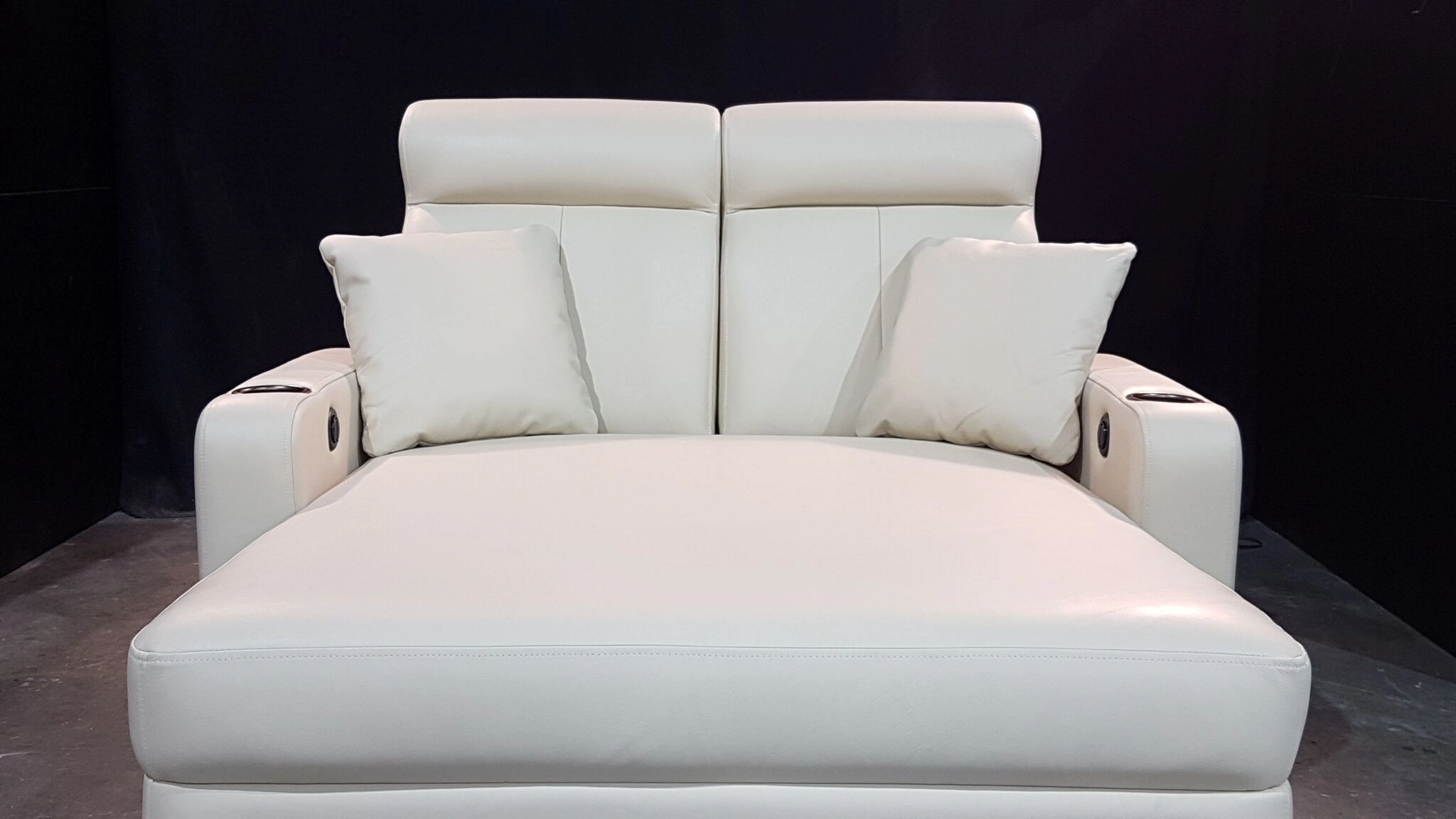
Single wall-hugger units work for solo or paired viewing. Double "loveseat recliners" seat two in roughly the same footprint as one full-size traditional recliner, making them a smart middle ground for small theater room seating where capacity matters.
Loveseats and Modular Sectionals
A two-person loveseat typically spans 52–58 inches wide – comparable to a single oversized recliner in floor space, but seats two viewers side-by-side with proper support. Modular sectional pieces add flexibility: individual units can be rearranged for different group sizes or pushed aside when the room serves other purposes.
Home Theater Seating Arrangements for Small Rooms
The layout determines how well every seat performs. Room depth and width dictate which configurations are viable.
Single-Row Layout: The Cleanest Option for Narrow Spaces
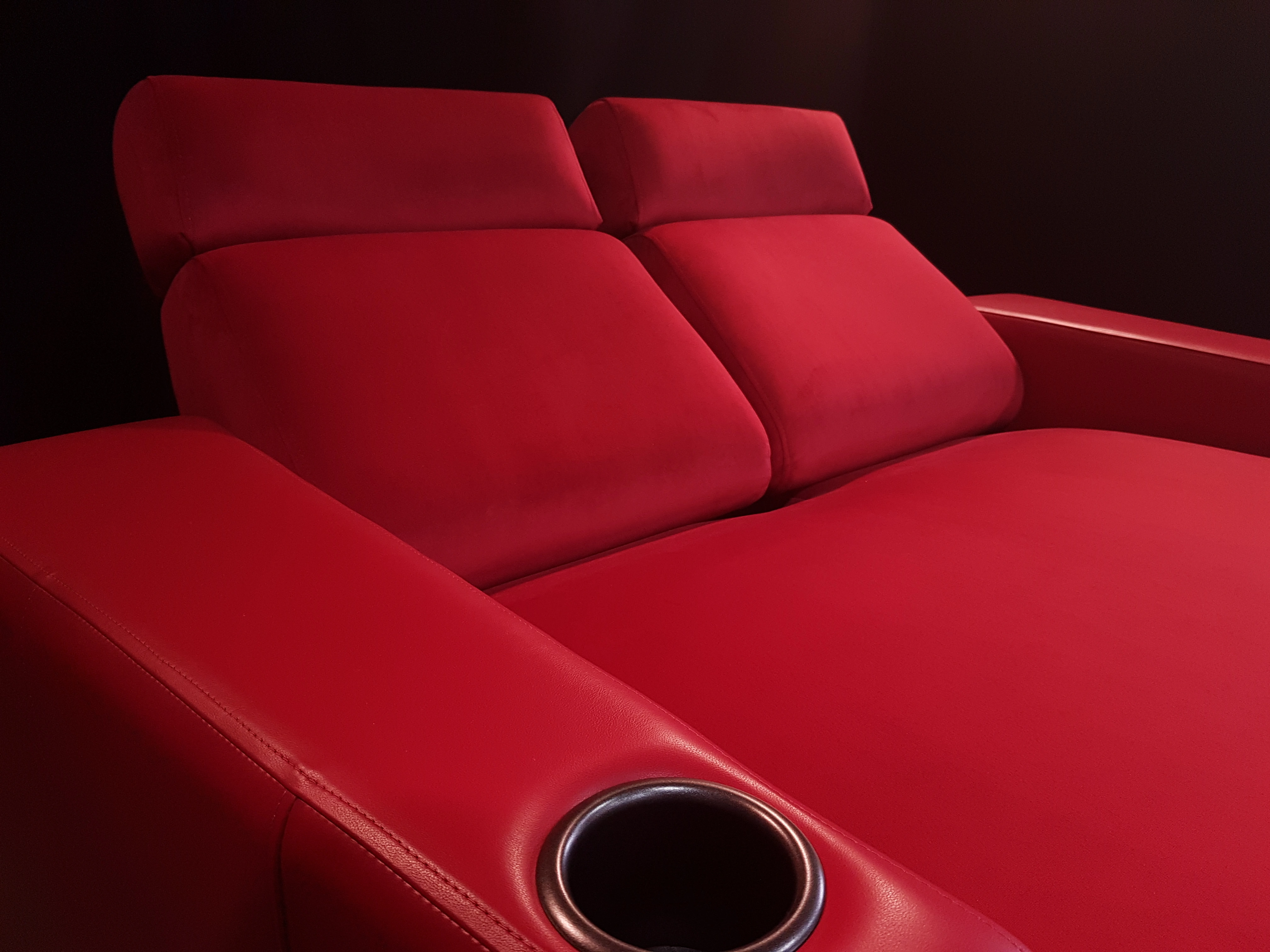
For rooms under 10 feet wide, a single centered row is almost always the right call. Every viewer gets an equal sightline. No elevation platforms are needed. The layout also simplifies lighting, cable management, and acoustic treatment – simple doesn't mean lesser.
Two-Row Layouts: When They Work and When They Don't
Two rows require at least 13–14 feet of room depth to function well. Staggered seating – rear seats offset from front seats – can work on a flat floor when front-row chairs are low-profile. More reliably, an 8–12 inch riser platform under the rear row clears sightlines regardless of front seat height.
Forcing two rows into a room with under 12 feet of depth typically makes both rows uncomfortable. If the depth isn't there, a well-equipped single row is the better investment.
Corner and L-Shaped Configurations
Square rooms that don't suit a traditional row layout often work well with an L-shape. One section faces the screen directly; the other sits at an angle. The angled seats offer a noticeably different viewing experience – acceptable for casual use, less ideal for long sessions. Worth planning for before buying, not discovering afterward.
What to Look for in the Seats Themselves
Seating comfort is the most direct factor in how much people enjoy the space – more than screen size, more than audio configuration.
Seat specifications to prioritize for home theater seating in small rooms:
- Seat depth: 20–22 inches is the practical range. Anything deeper pushes the viewer too close to the screen and overwhelms the floor plan.
- Back support: A seat that lacks lumbar contact causes discomfort within 45 minutes. Test for lower back contact and headrest position before buying.
- Reclining mechanism: Confirm how far the seat reclines and the clearance it requires. Some fully-flat recliners need front clearance that compact rooms can't provide.
- Upholstery: Leather and faux leather are durable and easy to clean, but can feel warm in rooms with limited airflow. Performance fabric upholstery offers breathability without sacrificing durability – the stronger choice for smaller, less-ventilated spaces.
Space-Saving Features Worth Prioritizing
For rooms that serve multiple purposes, every piece of furniture should justify its footprint. The most effective small theater room seating ideas in multi-use spaces build function into the seating itself:
- Built-in cup holders and storage compartments eliminate the need for side tables, freeing floor space
- Under-seat storage in ottomans and benches keeps cables, remotes, and accessories out of sight
- Modular chairs that reconfigure for different group sizes give the room long-term flexibility
- Rear-wall bench seating with thick cushions adds 2–3 viewer spots during gatherings without permanently claiming central floor space
Room Conditions That Affect the Viewing Experience
The seating position affects acoustics. Hard floors reflect sound and create a hollow, echoey quality in small rooms. A large area rug placed under and around the seating absorbs surface reflections and noticeably improves clarity – no equipment purchase required.
Glare from windows is an underappreciated problem. A seat positioned directly across from a window suffers during daytime viewing. Blackout curtains address it completely; repositioning the seating by a few feet can also help in rooms with layout flexibility.
Dimmable overhead lighting combined with low LED strip lighting along riser edges or under seat bases adds ambiance without creating bright spots that wash out the screen.
Build It Right from the Start
The seating is where every home theater experience actually lives – and in a small room, the quality of that decision shows immediately. Elite HTS produces commercial-grade home theater seating built specifically for spaces like apartments and dens: proportionate dimensions, durable construction, and full customization available.
All Elite HTS seating is built in Canada with a 20-year warranty and available in custom upholstery in any color to match any room's existing design. Request samples and specifications before committing, or browse current seating configurations sized for compact spaces.
Frequently Asked Questions
What is the best seating for a home theater small room?
Wall-hugger recliners and reclining loveseats are the most practical options. They provide full reclining comfort with minimal rear clearance requirements. For rooms that serve dual purposes, modular seating with reconfigurable units gives the most long-term flexibility.
How do you arrange seating in a small theater room?
Start with the screen position, calculate the viewing distance, and place seating accordingly. For rooms under 10 feet wide, a single centered row delivers the best sightlines for all viewers. Rooms with 14+ feet of depth can support two rows, ideally with a rear riser platform.
Are wall-hugger recliners ideal for apartments?
Yes. Because they slide forward rather than extending backward, wall-huggers require only 4–6 inches of rear clearance – making them viable in rooms where a standard recliner physically won't fit without blocking a walkway.
Can loveseats work for small home theater seating?
A two-person loveseat spans roughly the same width as a single full-size recliner but seats two viewers comfortably. Reclining loveseat models perform particularly well in home theater seating arrangements for small rooms where capacity is needed without doubling the furniture footprint.
How far should seating be from the screen in a small room?
Recommended distance is 1.2 to 1.5 times the screen diagonal for a 40-degree field of view. For a 65-inch TV, that places ideal seating at 6.5–8.5 feet. Rooms with 6–10 feet of viewing depth pair best with 80–100-inch screens.
Single row or two rows – which is better for a small home theater?
For rooms under 13 feet deep, a single row is the better option. Two rows in a shallow room create sightline problems that require a riser platform to solve, and the platform itself consumes depth the room may not have.